
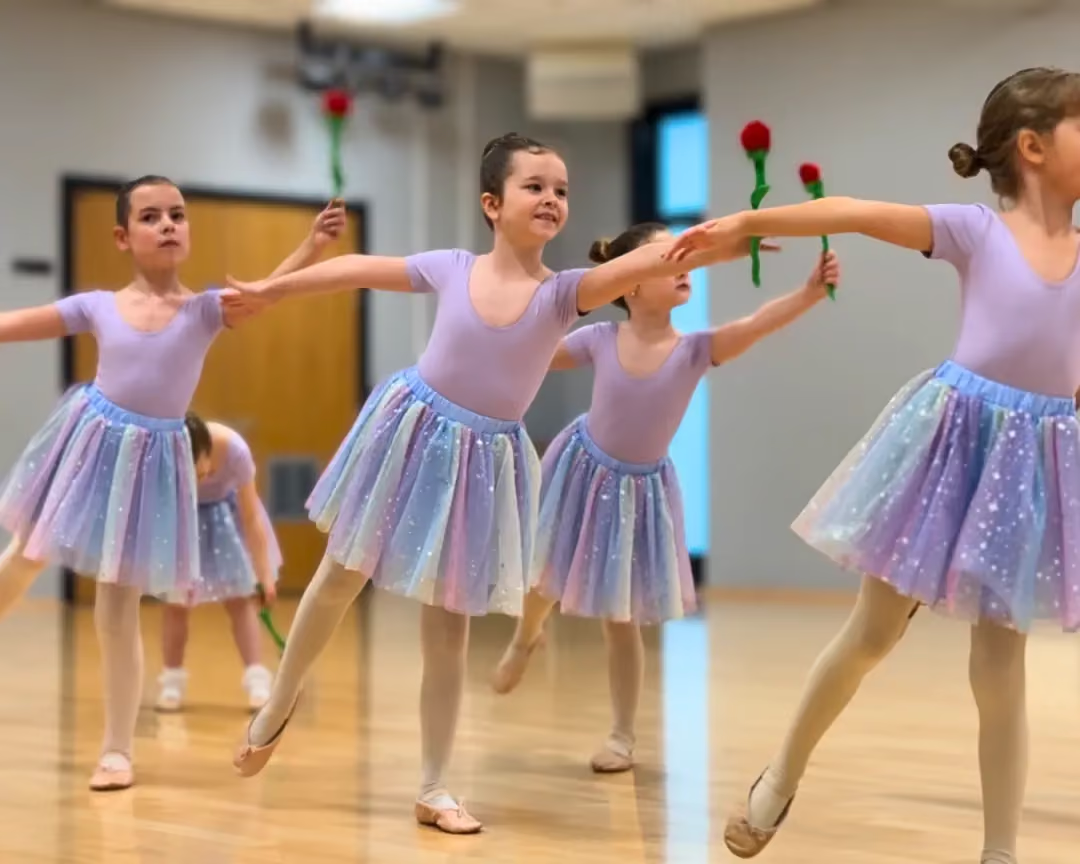
If your child does ballet, you'll soon start hearing words like “ISTD,” “Primary” and “Grade 1.” If you've never danced yourself, it can all sound a bit mysterious. Here's a plain-English guide to what it means — written so you can feel confident about your child's dancing, and reassured that there's never any pressure.
The ISTD — the Imperial Society of Teachers of Dancing — is one of the most respected dance examination boards in the UK. It sets carefully structured syllabuses that take dancers step by step through proper technique. Our Ballet & Jazz classes are taught to the ISTD ballet syllabus by our ISTD-qualified principal, Miss Hannah, so your child learns recognised technique in the right order, building solid foundations as they grow.
Grades are simply the levels a dancer moves through as they develop. Children usually begin with Primary, then progress to Grade 1, Grade 2 and upwards, each level building on the last. You'll see this reflected in our class names — Ballet & Jazz (Primary), (Grade 1), (Grade 2) — so children are always working at a level that suits their stage, not just their age.
No — and this matters to us. Our in-class assessments are completely optional and always led by the child's readiness and enthusiasm, never by pressure. Many of our dancers happily work through the syllabus simply because the structure helps them improve. Those who'd like a goal to aim for can take part in an assessment when they and their teacher feel the time is right.
When the time feels right, we hold a relaxed in-class assessment during your child's normal lesson — no separate exam day, no visiting examiner, and no extra cost. Miss Hannah simply watches them perform the steps they've been working on, in the room they already know, with the friends they already dance alongside. It takes the pressure off while still giving them something real to work towards — and every dancer who takes part receives a certificate to celebrate what they've achieved.
We love the structure the ISTD syllabus gives us, but we hold it lightly. Our priority is always a happy, confident dancer who loves coming to class. The syllabus and our in-class assessments are a tool to support that — never the other way around.
If your child is just starting out, our guide to choosing the right dance style and the class timetable are great next stops — or you can book a trial to see a class for yourself.
Questions about the syllabus, grades or assessments? Message us via our contact page.